


Welcome to emergency care at MedStar Health
When an emergency happens, MedStar Health is equipped with cutting-edge technology and an experienced staff to treat you or your loved ones.
Exceptional emergency treatment is available for anything from a serious injury or illness to a mild condition that has not responded to home remedies. With expert physicians, physician assistants, nurses, and support staff, we offer comprehensive emergency evaluations and treatments—all within a caring and compassionate environment.
-
200
Physicians
-
110
Physician Assistants
Caring for more than 470,000 patients
Over 100,000 admissions to MedStar each year
Emergency Medicine Research: Defining the Future of Healthcare
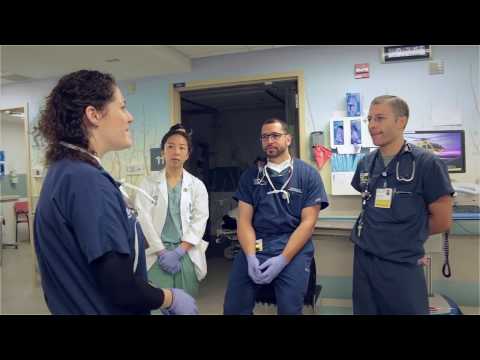

When to visit the emergency room
Visit when you are experiencing a major or life-threatening issue that requires immediate testing and treatment. Examples include the following:
- Chest pain
- Difficulty breathing
- Severe abdominal pain
- Major head injury
- Heavy bleeding
- Severe dizziness or passing out (fainting or loss of consciousness)
- Stroke symptoms
- Seizures
- Other conditions with risk of loss of life or limb
Driving to the emergency room versus calling 911
- Do not drive yourself if you are experiencing a major or life-threatening issue, as the risk of an accident is increased
- You may accept a ride from a family member, friend, taxi, or ride-sharing service if your life is not in danger and your condition does not require immediate intervention
- Call 9-1-1 if your life is in danger or your condition is one in which every minute counts
What to bring with you
When you can gather them safely, we recommend bringing the following to help your visit go smoothly:
- A family member or friend: Having someone with you can be comforting, and you may need someone to provide information or instructions on your behalf if you have a serious condition.
- Identification cards: Bring your driver's license, social security card, and medical insurance card(s).
- List of medications and dosage: This will help us to avoid prescribing drugs that will interact with medication(s) you're already taking.
- Primary care physician information: It is helpful for us to be able to contact your primary care physician should questions arise.
Our physicians
Our emergency physicians are experienced and certified in a variety of sub-specialties. All of our physicians are board certified or board eligible, which is the highest standard for professional competency within the industry. Several of MedStar Health’s emergency departments also serve as home to academic training programs in emergency medicine, where the next generation of physicians are trained. MedStar Emergency Physicians offer a wide range of practice settings, along with the resources and educational opportunities that you would expect from an elite health system.
MedStar Emergency Physicians has been recognized by the Center of Healthcare Leadership and Management as a 2019-2020 Employer of Excellence.
A parent's guide to the emergency department
Prepare for the ER by knowing what to expect, bringing essentials, asking questions, and staying calm. This guide helps parents support their child and advocate for their care.
The Emergency Department (ED or ER) is a special part of the hospital where patients of all ages go when they need urgent medical care. Children might visit the ED for anything from a high fever or asthma flare-up to a broken bone. The ED team is trained to treat a wide range of medical issues quickly and safely.
Providers will utilize many types of medical equipment to help doctors and nurses understand how your body is working and provide the care you need. Some of these machines and tools may look big or unfamiliar at first, but each one plays an important role in diagnosing illnesses, monitoring health, and helping patients feel better.
Learning about the medical equipment used in the emergency department and inpatient units can help children and families feel more comfortable during a hospital visit. Below are some of the most common tools you may see and what they do.
-
What should I do before I take my child to the ED?
Call your pediatrician (if time allows)
It’s always helpful to see if your child’s pediatrician’s office is still open and able to see your child.
Gather important information
Bring your child’s insurance card, medication list, list of allergies, and any pertinent medical information.
Pack essentials
Bring comfort items like your child’s favorite toy or blanket. Pack distractions such as a phone or tablet with headphones and chargers, books, a sound machine, or games. Don’t forget snacks, water, portable chargers, and any medications your child may need.
Prepare your child
If possible, explain where you’re going and why. Use simple, honest language and reassure them that doctors and nurses are there to help.
Example:
“I know you’re not feeling great right now. We’re going to a special part of the hospital called the Emergency Department, where doctors and nurses help kids feel better when they need help quickly. I’ll be with you the whole time.”
-
What can my child expect in the ED?
Triage
When you arrive, a nurse will check your child’s vital signs (heart rate, breathing rate, temperature, and blood pressure) and ask questions to understand how serious the situation is.
Waiting room
If the ED is busy and your child’s condition is not urgent, you may need to wait. Use this time to help your child stay calm with comfort items, playing iSpy, or watching videos.
NPO
Sometimes the medical team may want your child to be an NPO, which stands for “nothing by mouth.” This means your child cannot eat or drink for a period of time in case tests or procedures are needed.
Exams and tests
The medical team may perform tests such as X-rays, blood work, or physical exams to determine what’s going on.
Treatment
Depending on the issue, treatment may include medication, bandages, fluids, or stitches. You’ll be kept informed throughout the visit.
-
What do we pack for a trip to the ED?
For your child
Bring things to help your child feel safe, busy, and cared for.
- Comfort & Entertainment: Favorite stuffed animal, blanket, electronic device, books, stress ball or fidget toy
- Chargers: For all devices
- Clothing: Extra set of clothes, socks, and underwear
- Practical Items: List of your child’s medications and allergies, water bottle and snacks (check with staff before giving anything), and medications if your child is due for a dose soon
For you
- Taking care of yourself helps you care for your child.
- Comfort & Entertainment: Sweater, socks, and comfortable shoes; books, devices, headphones, and charging cords
- Clothing: Extra set of clothes and a sweatshirt – it can be cold!
- Toiletries: Toothbrush, toothpaste, lotion, and hand sanitizer
- Practical Items: ID, insurance card, and medications
Pro tip
Keep a checklist printed and attached to a small “ED Go Bag” if your child has a condition that may lead to frequent emergency room visits, so you can grab and go when needed.
-
What types of medical equipment can my child expect to see?
Thermometer
A thermometer checks your body temperature to see if you have a fever. Some thermometers go in your ear, while others scan your forehead. The test only takes a few seconds and does not hurt.Blood pressure cuff
A soft wrap that goes around your arm and gently squeezes. It checks how hard your heart is working. It may feel tight for a few seconds, but it doesn’t hurt.Stethoscope
Doctors and nurses use a stethoscope to listen to your heartbeat and breathing. The round part of the stethoscope rests on your chest or back and may feel a little cool when it touches your skin.Pulse oximeter
A small clip that gently goes on your finger. It checks how much oxygen is in your blood. It doesn’t hurt at all.IV pole and pump
If the doctor decides you need medicine or fluids, they may use an IV (a tiny tube placed in your arm or hand).The pole holds the medicine bag.
- The pump makes sure the medicine goes into your body at the right speed.
- The IV helps medicine work faster to help you feel better.
Monitor
A screen that shows information about your body, like your heart rate and breathing. Doctors and nurses use it to see how your body is doing while you’re in the ED.X-ray machine
Takes special pictures of your bones or the inside of your body. It’s large and may make clicking sounds, but it doesn’t touch you and doesn’t hurt.Oxygen mask or tubes
If you need help breathing, the care team may give you extra oxygen.- A mask fits gently over your nose and mouth.
- Nasal tubes are soft and rest just inside your nose.
Both help your body get the oxygen it needs.
Hospital bed
Hospital beds can move up, down, or help you sit up with the push of a button. They have rails on the sides to help keep you safe.Lights and call button
Bright lights help doctors see better when checking your body.The call button lets you, your parent, or caregiver ask for help if you need something.
Needle and syringe
Sometimes a shot is needed to help you get better.- The syringe holds the medicine
- The needle gives the medicine to your body.
It’s a quick poke and is over in just a few seconds.
Medical gowns, gloves, and masks
Doctors and nurses wear these to help keep everyone safe from germs. They protect you and help the care team stay healthy while taking care of patients. -
Meet the team caring for your child
Triage nurse
The triage nurse is usually the first person you meet. They ask questions about how your child is feeling and check things like temperature, heart rate, and breathing to decide how urgently your child needs to be seen.
Front desk staff
Front desk staff help parents and caregivers with forms and make sure the hospital has important information like your child’s name, birthday, and insurance details.
Emergency room nurse
Emergency room nurses care for your child throughout the visit. They give medicine, monitor symptoms, perform treatments, and work closely with the doctor to help your child feel better.
Emergency room doctor
The emergency room doctor leads your child’s medical care. They determine what’s wrong, order tests if needed, and decide on the best treatment plan.
Advanced practice provider (APP)
An Advanced Practice Provider—such as a Nurse Practitioner (NP) or Physician Assistant (PA)—works closely with doctors to diagnose conditions, order tests, prescribe medicine, and answer questions. They often spend extra time supporting families.
Child life specialist
Child life specialists explain what’s happening in kid-friendly language. They use toys, games, and coping tools to help children feel calmer and more confident during their ED visit.
CNA / Technician
A CNA (Certified Nursing Assistant) or technician supports doctors and nurses by checking vital signs like blood pressure and temperature. They also help with comfort items such as blankets, towels, or snacks.
Radiology technician
If your child needs imaging—such as an X-ray, CT scan, MRI, or ultrasound—this team member safely takes pictures of the inside of your child’s body to help doctors diagnose problems.
Respiratory therapist
If your child is having trouble breathing, a respiratory therapist provides treatments like oxygen, breathing medications, or breathing support devices.
Security officer
Security officers help keep everyone safe. You may see them near entrances or walking throughout the Emergency Department.
Environmental services
Environmental services staff keep the Emergency Department clean and sanitized, helping protect patients, families, and staff from germs.
-
How can I support my child while they are in the ED?
Stay calm and reassuring
Your child takes cues from you. Be present, speak softly and honestly, and stay close.
Advocate for your child
Share concerns and ask questions. You know your child best. Encourage your child to ask questions too, if they are able.
Comfort and distract
Books, games, music, or videos can help pass the time and reduce anxiety.
Take breaks (if needed)
If another caregiver is present, it’s okay to step away briefly to reset.
-
What should I do after my child’s ED visit?
Follow-up
Understand discharge instructions and schedule follow-up appointments as recommended.
Watch for changes
Monitor your child for new or worsening symptoms and contact your doctor if you have concerns.
Care for yourself
ED visits can be stressful. Take time to rest, talk with someone, and care for your own well-being.
Talk about it
Reassure your child after the visit. Let them share their feelings, answer questions, and recognize their bravery.
Urgent care options
Visit MedStar Health Urgent Care for in-person care from 8 a.m. to 8 p.m. daily. Urgent care hours and services may vary by location. Walk-in visits are always welcome, but an online check-in is recommended. For more information, go to MedStarHealth.org/UrgentCare.
Choose MedStar eVisit - Telehealth for fast, simple, and secure virtual urgent care 24/7. Connect with a trusted MedStar Health provider from your phone, tablet, or computer, with no appointment needed. MedStar eVisit is available anytime, day or night, for patients in Maryland, Washington, D.C., and Virginia. Learn more about eVisit.
Download the MedStar eVisit – Telehealth app on your Apple or Android device, or log in directly on your computer.
If you are experiencing a life-threatening medical emergency, call 911 or go to the nearest emergency room.